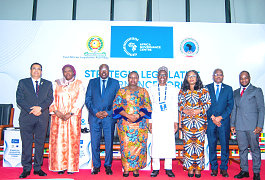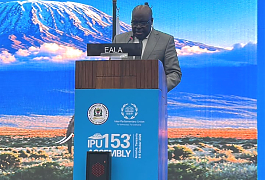
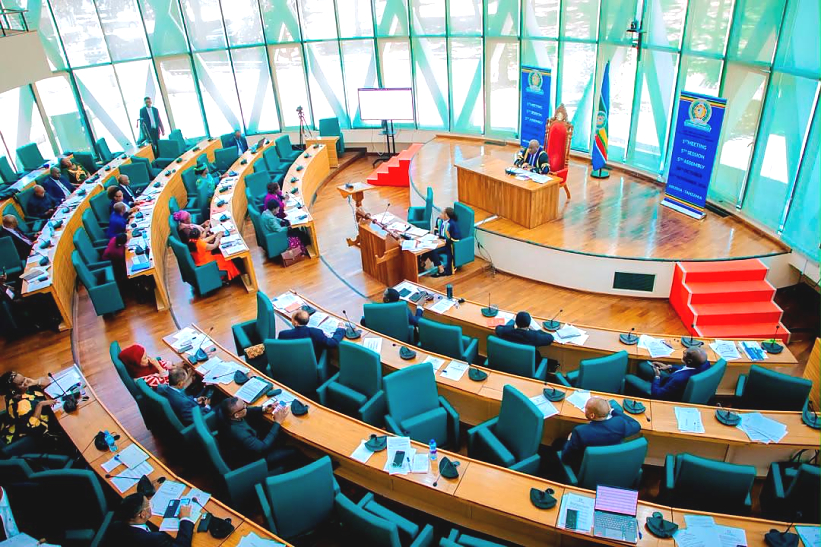
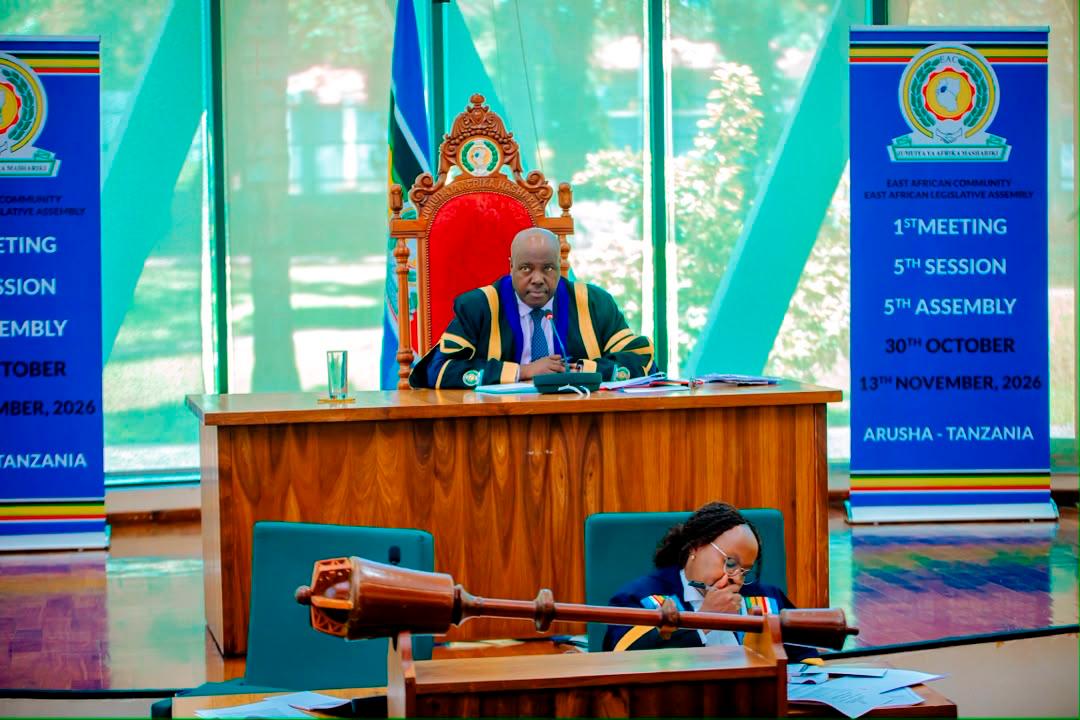
ARUSHA, TANZANIA — October 13, 2026 — The East African Legislative Assembly (EALA) successfully concluded its series of deliberations and sittings today, with the Speaker officially adjourning the House sine die. In the course of the deliberations in the week, the Assembly adopted a comprehensive slat.e of critical oversight reports, landmark motions, and institutional resolutions covering key areas of integration, ranging from political confederation, regional industrialization, public health security, disability inclusion, and aviation integration to administrative clarity for the upcoming Sixth Assembly
1. Regional Integration and Political Confederation Progress
• Oversight Report on Political Confederation:
The Assembly debated and successfully adopted the comprehensive oversight report presented by the Committee on Regional Affairs and Conflict Resolution, evaluating the progress of the roadmap toward a Political Confederation as a transitional arrangement to a Political Federation.
• Integration and Status of the Federal Republic of Somalia (FRS):
Somalia was noted to have ratified the EAC Treaty on February 10, 2024, actively engaging in EALA and East African Court of Justice processes while benefiting from a vibrant youth demographic and stable regional security. However, targeted capacity-building support in constitutional and legislative drafting was urgently recommended to bridge institutional gaps in the country.
• Commitment from the United Republic of Tanzania (URT):
Tanzania reaffirmed its strong commitment to regional integration timelines, scheduling the conclusion of its inclusive citizen sensitization exercise by November 2026.
• Council Directives:
The Assembly urged the Council of Ministers to support legal harmonization, fast-track inclusive public consultations, aggressively seek dedicated constitutional funding, finalize the stalled EAC Good Governance Protocol, and enforce strict compliance for meeting notices and documentation dispatch.
2. Public Health, Nutrition, and Rare Disorders
• Comprehensive Framework on Haemophilia and Inherited Bleeding Disorders:
Moved by Hon. Clement Musangabatware and seconded by Hon. David Ole Sankok under Articles 49(2)(d) and 118(a), (b), and (c) of the EAC Treaty, EALA passed a landmark resolution urging urgent regional action on haemophilia and other inherited bleeding disorders. Lawmakers highlighted that while global statistics suggest Haemophilia A affects 1 in every 5,000 male births and Haemophilia B impacts about 1 in every 25,000, actual data across the EAC remains largely undocumented due to a lack of registries and surveillance.
To combat barriers like delayed diagnosis, low public awareness, inadequate laboratory capacity, and unequal access to treatment, the resolution calls for integrating care into national health policies, Universal Health Coverage (UHC) programmes, and health insurance schemes, alongside establishing interoperable national registries, building specialized workforce capacity, and leveraging the EAC Pooled Procurement Mechanism.
• Combatting Unhealthy Diets, Ultra-Processed Foods, and NCDs:
Moved by Hon. Dr. Aisha Nyiramana and seconded by Hon. Dr. Gladness Salema, the House addressed the rising regional threat of non-communicable diseases (NCDs) such as diabetes, cardiovascular conditions, obesity, and cancers linked to ultra-processed foods rich in free sugars, sodium, saturated fats, and trans-fats, as well as the aggressive marketing of junk food to children across digital, broadcast, and school environments.
The Assembly called for baseline assessments, harmonized regional standards using a nutrient profile model with mandatory front-of-pack nutrition labelling, product reformulation targets, elimination of industrially produced trans-fats, and strict minimum standards to protect children and public institutional settings.
• Strategy for Highly Hazardous Pesticides (2026–2036):
Moved by Hon. Caroline Rwivanga Kayonga and seconded by Hon. George Stephen Odongo, EALA adopted a decisive resolution to fast-track the integration of this strategy into national and regional policies with adequate financial backing to safeguard human health, biodiversity, soil, and water quality, and agricultural trade from counterfeit agrochemicals and weak enforcement.
• Evaluation of Regional Centres of Excellence (RCEs) in Health:
The Assembly reviewed findings from the Committee on General Purpose's oversight mission conducted from September 21 to 25, 2026. The delegation inspected the Regional Centre of Excellence for Vaccines, Immunisation and Health Supply Chain Management (RCE-VIHSCM) in Kigali, Rwanda—noting its enrollment of 489 Master's students, training of over 3,375 professionals, production of 84 peer-reviewed publications, and real-time monitoring capabilities at the Rwanda Medical Supply Operations Center—and the Regional Centre for Cardiovascular Sciences at MUHAS in Dar es Salaam, Tanzania, which pioneered AI and robotic diagnostic labs, TAVI procedures, and pediatric cardiac and bone marrow transplants.
The Committee recommended establishing a predictable annual budget line within the EAC budget, joint group contracting under Phase III of the Pooled Procurement Mechanism, and expanded regional training networks.
3. Economic Integration, Industry, and Aviation
•Fast-Tracking Regional Value Chains (RVCs):
Moved by Hon. Dr. Gladness Salema and seconded by Hon. Caroline Kayonga, EALA adopted a resolution to transform the region's productive capacity away from heavy reliance on exporting raw or semi-processed agricultural, mineral, livestock, and forestry commodities toward high-value manufacturing in sectors such as agro-processing, pharmaceuticals, leather, textiles, and automotive.
Grounded in variable geometry and equitable benefit-sharing, the framework prioritizes establishing a unified EAC Regional Value Chain Development Framework and Implementation Plan, eliminating non-tariff barriers, harmonizing rules of origin and SPS measures, providing targeted public and private financing for MSMEs, women, and youth, and implementing robust accountability mechanisms to track local value addition and employment generation.
• Opening Regional Skies (Single EAC Airspace and Air Traffic Liberalization):
Hon. Kennedy Musyoka Kalonzo introduced the East African Community Domestication of Airspace and Liberalization of Air Traffic Rights Bill, 2026, a zero-draft framework anchored on Articles 89 and 92 of the EAC Treaty. Supported by a corresponding Private Member's Motion building on the Yamoussoukro Decision to move beyond restrictive Bilateral Air Service Agreements (BASAs), the initiative establishes a unified regional airspace managed jointly without internal boundaries, classifies all flights operated by eligible EAC-registered carriers within the common airspace as domestic flights guaranteeing automatic route access up to fifth-freedom traffic rights, harmonizes navigation fees and airport charges without discriminatory pricing against regional operators, and mandates that qualifying airlines maintain headquarters, primary bases, at least 60% of operations within Partner States, and key management personnel drawn from the region.
4. Institutional Inclusion and Administrative Governance
•Rights and Reasonable Accommodation for Persons with Disabilities:
Unanimously adopted under a revised motion introduced by Hon. Bahati and seconded by Dr Woda Jeremiah, the House expressed deep concern over the unassented status of the East African Community Persons with Disabilities Bill passed in 2016 and the lack of essential accessibility infrastructure, such as compliant ramps, handrails, and audio-assisted lifts across current EAC facilities and the EALA Chamber. Consequently, the Council of Ministers was directed to finalize policies on reasonable accommodation and instruct the EAC Secretariat to retrofit all institutional infrastructure to guarantee full dignity, safety, and non-discrimination.
• Implementation Framework for 25th Ordinary Summit Decisions:
Following a motion moved by Hon. Jacqueline Amongin and seconded by Hon. Falhada Iman Dekow, EALA addressed procedural concerns stemming from the 25th Ordinary Summit held on March 7, 2026, and subsequent communications regarding the Sixth Assembly. While respecting the ultimate authority of the Summit, the House called upon the Council of Ministers to table authenticated texts of EAC SHS 25/Decisions 02 and 03 concerning quorum requirements and remuneration structures, clarify the legal basis of subsequent administrative letters, and provide a comprehensive, Treaty-compliant implementation framework covering elections, terms of service, and allowances with a strict reporting deadline set for December 3, 2026.
The Speaker, adjourned the House sine die.
-END- Nicodemus Ajak Bior
Senior Public Relations Officer (SPRO)
East Africa Legislative Assembly
Arusha, Tanzania
Tel: +255-768-885-633/, +254729157207(WhatsApp)
Email: nbior@eachq.org
Web: www.eala.org

_265_180shar-50brig-20_c1.jpeg)