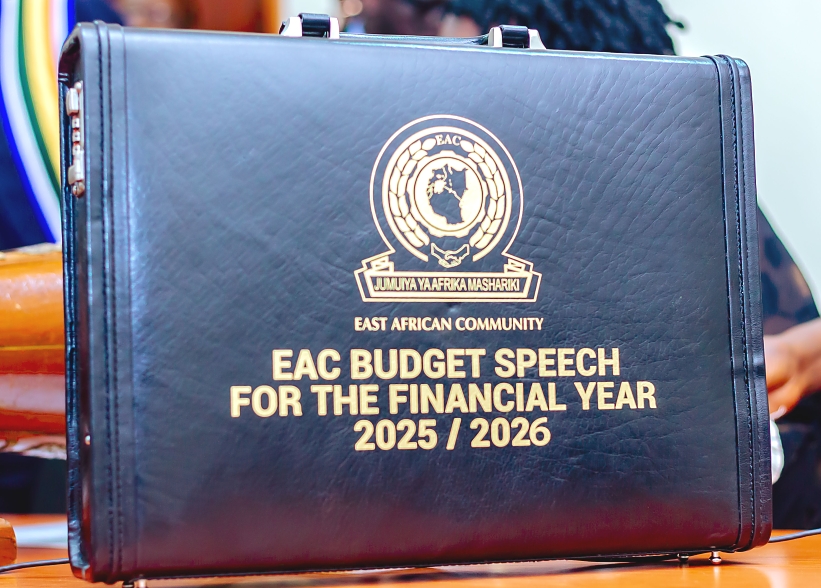
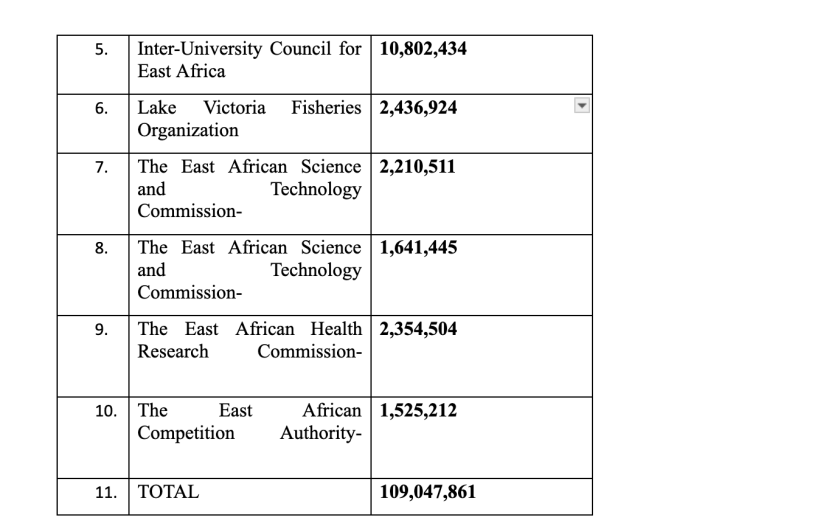
Arusha, Tanzania — July 10, 2025 — The East African Legislative Assembly (EALA) has approved the East African Community Estimate Budget for the fiscal year 2025/2026 amounting to One Hundred Nine Million, Forty-Seven Thousand Eight Hundred Sixty-One United States Dollars only (USD 109,047,861), with the appropriation instruments to meet the expenditure of the organs and Institutions of EAC for the Financial Year ending June 30th, 2026.
This budget will support a wide range of programs and activities essential for advancing key policy priorities including strengthened regional stability and socio-economic conditions, increased intra-EAC trade and market integration, progress toward a unified monetary and fiscal framework with preparations for a single currency, enhanced institutional capacities, and the development of climate-resilient infrastructure and digital platforms to facilitate cross-border trade.
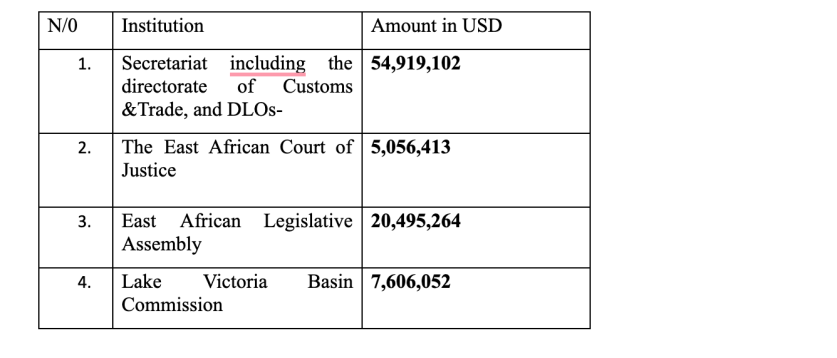
The Budget approved for the FY2025/2026 is allocated across various EAC Organs and Institutions as follows:
In his report, Hon. Mukulia Ayason, Chair of EALA’s General Purpose Committee, highlighted that in 2024/2025, the East African Community (EAC) made significant progress in strengthening regional peace, security, political cohesion, and governance. Key achievements included playing a pivotal role in restoring peace in Eastern DRC through high-level summits and the AU/EAC/SADC coordination mechanism. The community successfully deployed an Electoral Observation Mission to Rwanda’s peaceful 2024 elections and promoted cross-border cooperation through initiatives like the peace caravan along the Kenya-Uganda-South Sudan border.
Economically, intra-regional trade surged, with the EAC’s total trade increasing by 14.17%, reaching USD 124.9 billion, driven by growth in exports and imports. The efficacy of the Customs Union was evident as intra-EAC trade expanded by 9.35%. The community also made strides in addressing non-tariff barriers, resolving 16 out of 47 cases, and boosting regional trade through the MSMEs Trade Fair in South Sudan, which attracted over 1,580 exhibitors.
Progress was notable under the Common Market Protocol, with the adoption of Annex VII on Mutual Recognition of Qualifications, a Labour Migration Policy to harmonize labor laws, and new competition rules to enhance transparency. On fiscal and monetary fronts, the community adopted a framework for the East African Monetary Union and launched the Cross-Border Payment System Master Plan, aiming to modernize financial transactions.
Regional infrastructure saw advances, including the adoption of air transport liberalization regulations, the groundbreaking of Africa’s first Regional Center for Aviation Medicine in Nairobi, and Burundi’s implementation of the One Network Area Roaming Framework. Social sectors also experienced growth, with initiatives to improve agricultural productivity, conservation of biodiversity, maritime safety, and health systems. Academic mobility increased, with staff exchanges and research training programs.
The EAC celebrated its 25th anniversary, bolstered citizen awareness through nationwide events, and secured USD 75.4 million from development partners to support ongoing projects. Financial management improved, with all organs earning clean audit opinions, reflecting stronger internal controls.
Despite these accomplishments, the report highlighted key challenges that limited full achievement of regional goals. Delays in Partner States’ contributions and reliance on external aid posed sustainability concerns. Institutional capacity gaps, staffing shortages, slow legal reforms, planning inconsistencies, limited transparency in procurement, and delays in VAT refunds continued to impede efficiency. Addressing these issues remains critical for deepening regional integration and sustainable development in the coming years.
STATUS OF PARTNER STATES CONTRIBUTION AS AT 25th APRIL, 2025
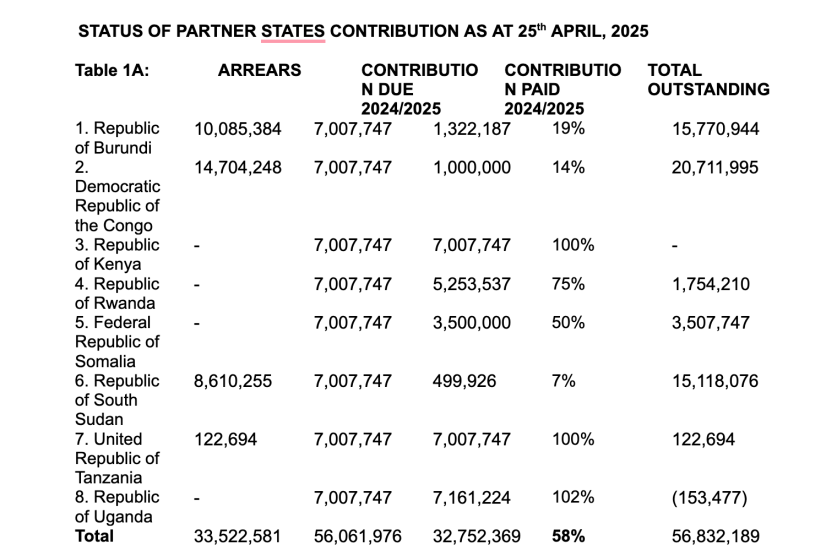
The Assembly underscored the importance of Partner States prioritizing the timely remittance of their contributions to enhance financial stability and ensure the effective support of regional programs. It observed that, despite progress, significant efforts remain necessary to address ongoing challenges. Accordingly, the Assembly made several key recommendations: strengthening compliance mechanisms to ensure Member States meet their contribution deadlines, accelerating legal and institutional reforms to facilitate deeper integration, and improving transparency and accountability in procurement and budgeting processes. Additionally, it emphasized the need to develop clear roadmaps for the integration of new Member States such as South Sudan and the Democratic Republic of Congo. To support these efforts, the Assembly also called for timely recruitment and retention of critical personnel to close staffing gaps, as well as streamlining processes for the prompt filing and clearance of VAT refunds, which are vital for maintaining stakeholder confidence and ensuring the smooth implementation of ongoing projects.
The Assembly urges all Partner States, development partners, and relevant stakeholders to collaborate in the effective implementation of these programs, with the ultimate goal of creating a prosperous, stable, and integrated East Africa. The Assembly remains committed to its oversight and legislative roles to ensure that these commitments translate into meaningful socio-economic benefits for all citizens of the region.
#END#
For further information, please contact:
Nicodemus Ajak Bior
Senior Public Relations Officer (SPRO)
East Africa Legislative Assembly
Arusha, Tanzania/
Tel: +255-768-885-633/, +254729157207(WhatsApp)
Email: nbior@eachq.org/kwachwuou@gmail.com
Web: www.eala.org
_265_180shar-50brig-20_c1.jpeg)